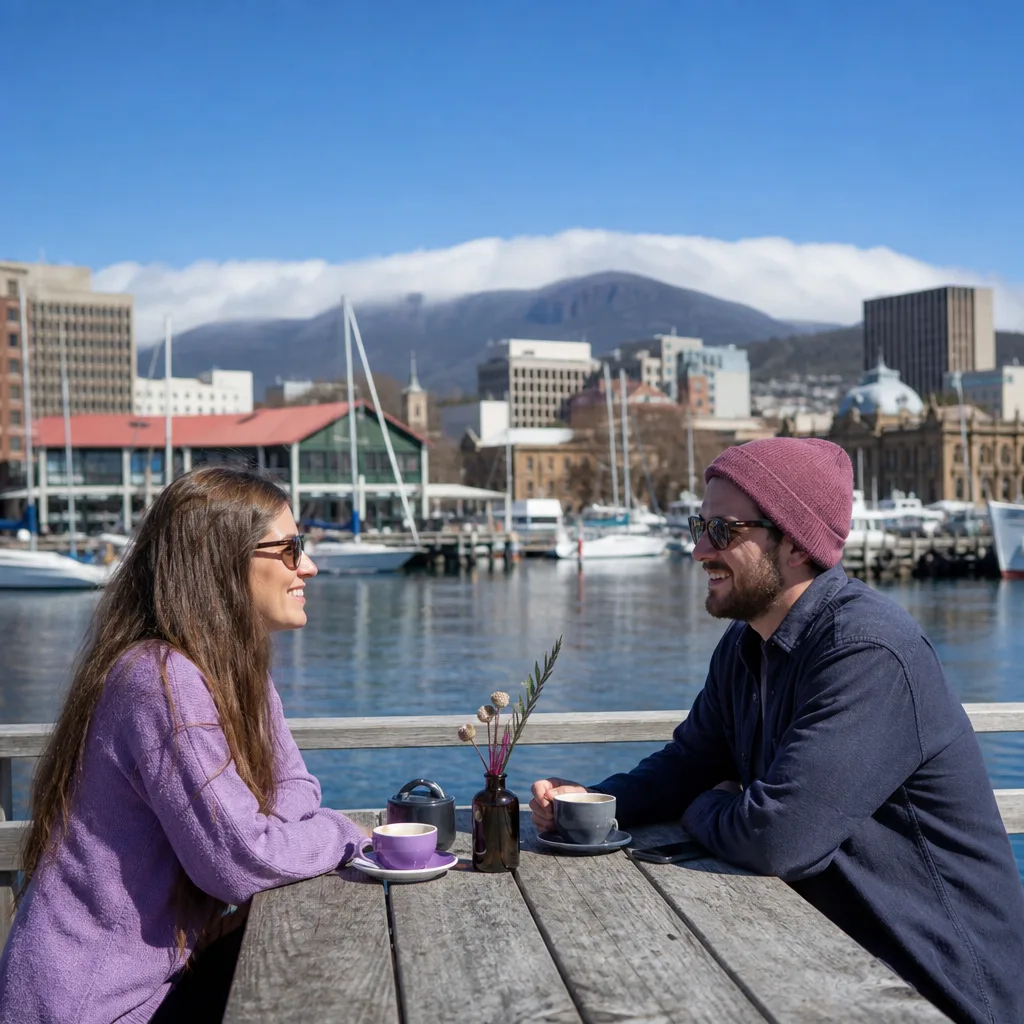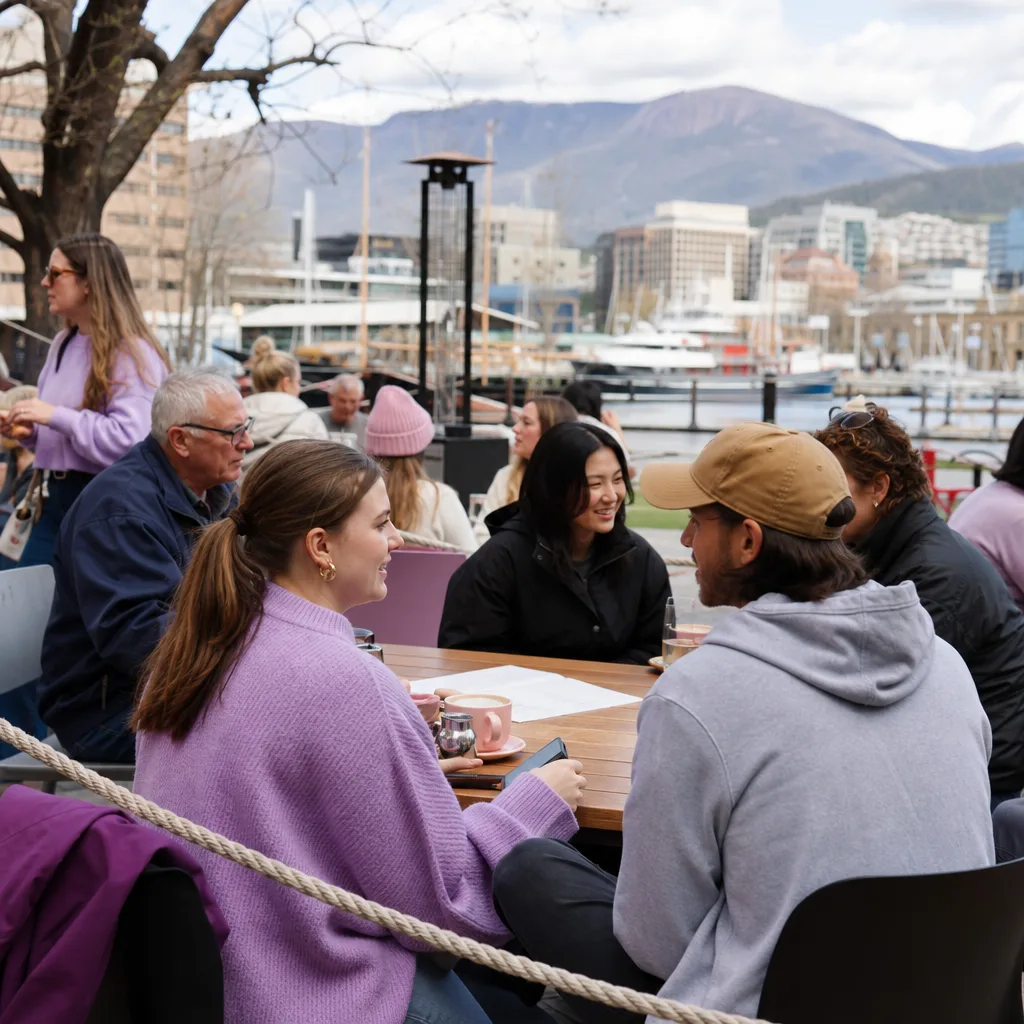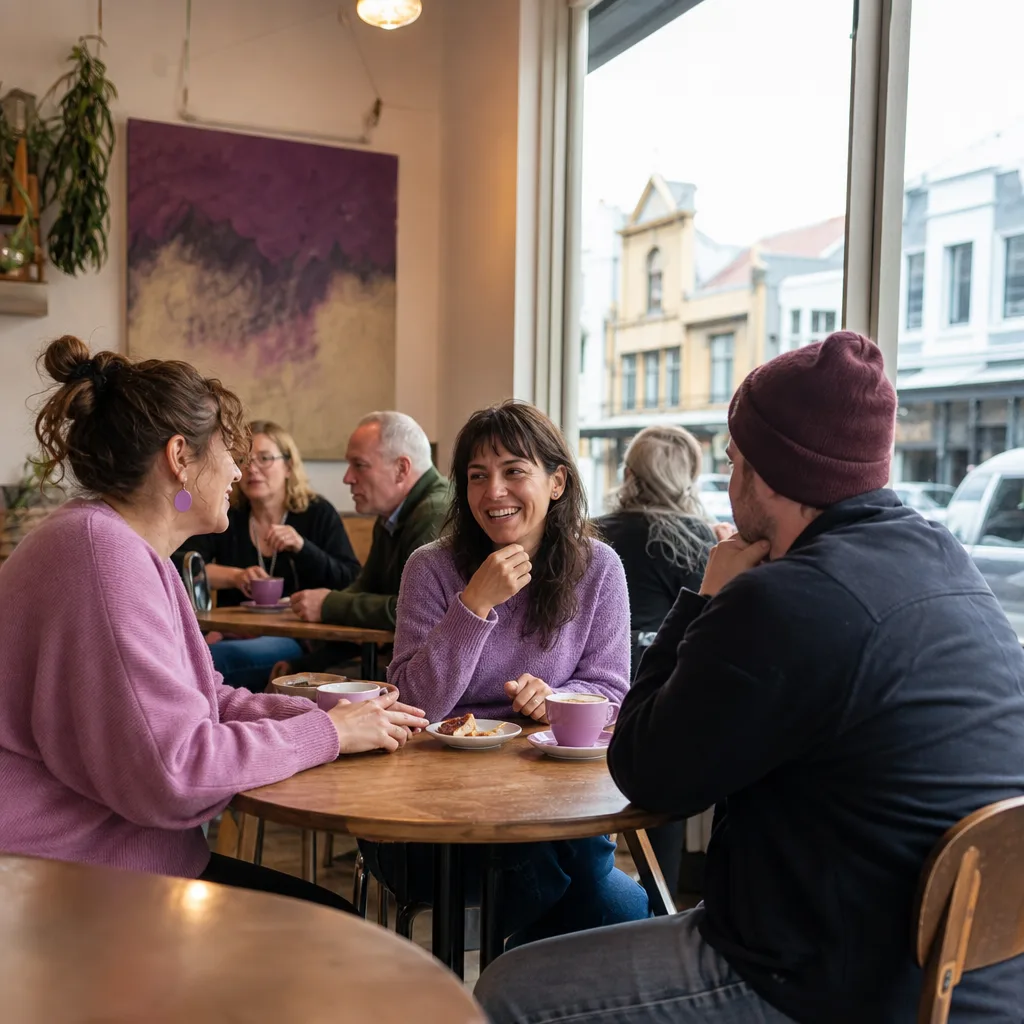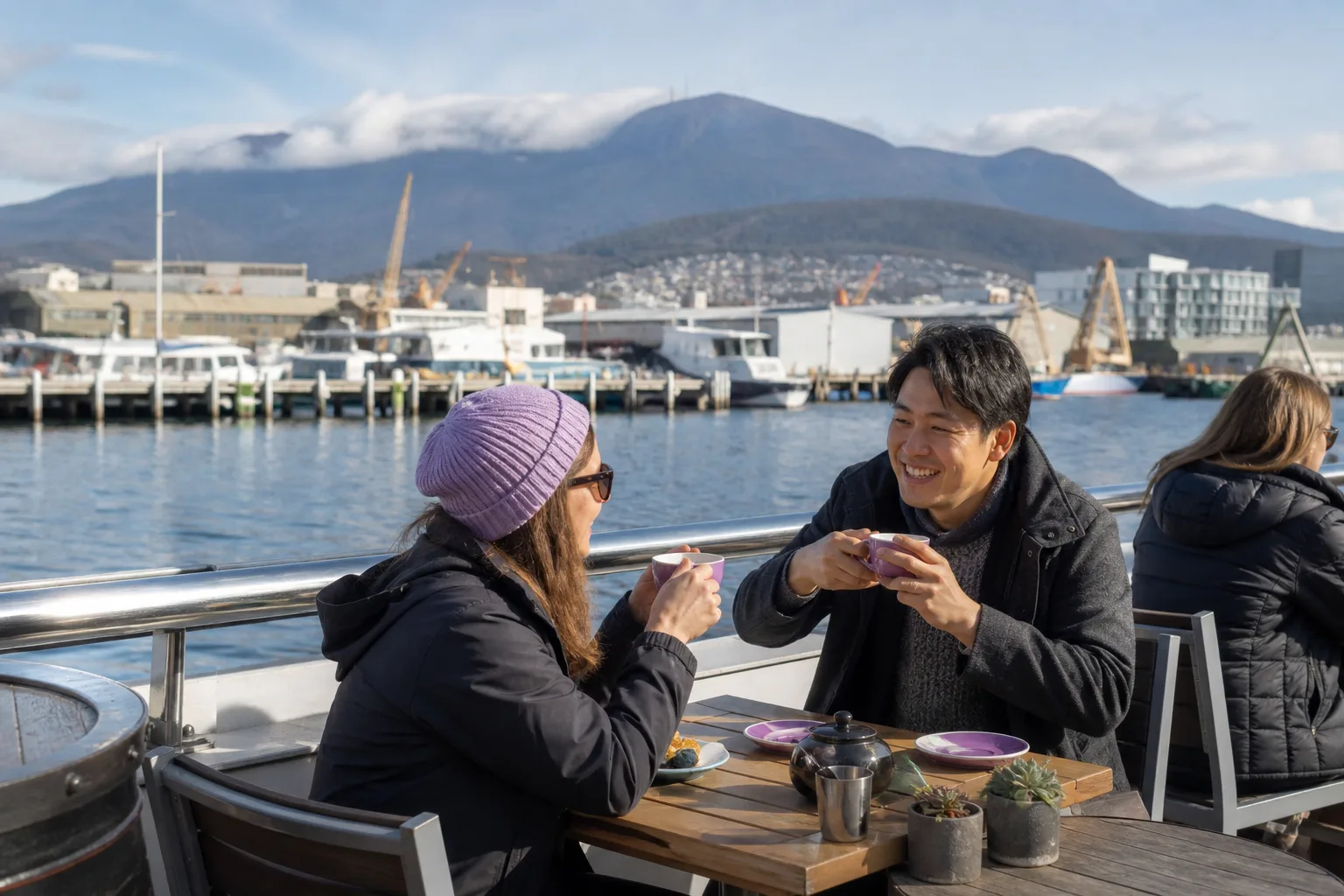
Straightforward local advice for meeting people through events, activities, community groups and dating in Hobart and beyond.
It is Saturday morning at Salamanca Market. One person is comparing sourdough loaves, another is waiting for coffee, and two strangers have just started talking because a gust off the waterfront sent a paper bag skittering between them. None of this looks like a singles event. That is precisely why conversation can feel easier.
Meeting someone in Southern Tasmania rarely comes down to finding one magical venue packed with unattached people. The region is too spread out for that, and social circles can be settled. Hobart has the largest concentration of people and events, but the wider picture includes Kingston, Margate, Huonville, Cygnet, New Norfolk, Sorell, Richmond, the Tasman Peninsula and smaller communities around the Channel and Derwent Valley.
The practical challenge is not a shortage of things to do. It is choosing situations where people have time to talk, where attendance is repeated, and where arriving alone does not feel conspicuous. A loud bar may contain plenty of people, yet provide very little room for an actual connection. A monthly volunteering session might introduce you to fewer people, but give you three hours of shared work and natural conversation.
Where can you meet singles in Southern Tasmania?
The best places to meet singles are recurring social activities, community events, markets, classes and relaxed venues where conversation is already part of the experience.
Start with places you would be reasonably happy to visit even if you met nobody. That protects you from treating every outing like an audition. It also makes you easier to talk to because you are occupied, interested and not scanning the room.
- Markets and public events. Salamanca Market runs on Saturdays and gives you an easy reason to ask a stallholder or another shopper a question. Farm Gate Market on Sundays has a similarly casual rhythm. Go slowly rather than marching through with a shopping list.
- Classes and workshops. Cooking, ceramics, drawing, dance, gardening and language classes bring people together around a task. A multi-week course is usually better for getting acquainted than a one-off workshop.
- Walking and outdoor groups. Southern Tasmania has bushwalking, running, paddling and conservation communities. Choose a level you can comfortably manage. Exhaustion does not improve conversation.
- Volunteering. Landcare activities, community gardens, festivals, sporting clubs and local charities often need practical help. Shared work removes much of the pressure to be immediately charming.
- Cultural venues. Film screenings, gallery openings, author talks and live music create a ready-made topic. Hobart's State Cinema and events at local libraries are useful places to watch for public programs.
- Online dating with a local filter. A focused Hobart dating site can help you find people who are actually within a realistic travelling distance, especially if your working hours or location make regular events difficult.
The useful question is not “Where are all the singles?” It is “Where will I see some of the same people often enough for familiarity to grow?”
That distinction matters. Attraction can be quick, but trust is usually built through small repetitions: remembering a name, continuing last week's conversation, or discovering that you both know the same stretch of coastline. In a compact region, steady participation beats frantic social hopping.
Events, Groups and Everyday Places
A good social setting gives you three things: a reason to be there, something obvious to discuss and enough time for conversation to develop. Search for that combination rather than concentrating only on the number of people in the room.
Which social events and hobby groups are best for meeting people?
Recurring groups with shared tasks are generally the strongest option because they allow conversation and familiarity to develop without forcing romance into the foreground.
The phrase “singles events Southern Tasmania” can bring up speed dating, organised dinners and one-off parties. These can work. Everyone understands why they are there, which removes uncertainty. The catch is that attendance varies, age ranges may be broad, and a single evening gives you little time to see how someone behaves outside a formal introduction.
Ordinary social groups often work differently. They are slower, but they reveal more. You notice who turns up reliably, who includes newcomers and who becomes impatient when plans change. Those details tell you more than a polished five-minute pitch.
| Setting | Why it helps | What to expect |
|---|---|---|
| Short course | Repeated contact and a shared subject | Conversation develops over several sessions |
| Volunteer project | People work side by side | Practical clothes, mixed ages and less social pressure |
| Walking group | Natural one-to-one conversations | Fitness and weather affect the experience |
| Market or festival | Easy to attend without a companion | Plenty to discuss, but contact may be brief |
| Singles event | Relationship intentions are clear | Efficient, although chemistry can feel compressed |
For social groups Southern Tasmania residents can search council event calendars, Libraries Tasmania listings, neighbourhood houses, local sporting clubs, environmental organisations and community noticeboards. Some active groups use Facebook or Meetup, while others still rely on an email list and a poster at the library. Check the date of the latest post before assuming a group is current.
Think laterally about hobbies. Book clubs and dance classes are obvious social choices, but practical activities can be just as good. A repair workshop, community garden, choir rehearsal or beginner sailing session gives people something to do with their hands. Silence is not awkward when everyone is working.
Practical tip: Commit to attending the same activity three times before deciding it is not for you. The first visit is usually spent learning names and routines. By the third, people recognise you, and conversation becomes far less formal.
Where can you go alone in Hobart without feeling awkward?
Markets, daytime cultural venues, public talks, casual food halls and group activities are comfortable solo choices because attending alone is normal.
Daytime is underrated. At Salamanca Market you can browse, eat and pause without looking as though you are waiting for somebody. The Royal Tasmanian Botanical Gardens offers quiet walks and public events, while the ferry from Brooke Street Pier to MONA gives passengers an obvious shared experience before they even reach the museum. Check current timetables and ticket arrangements before setting out.
For evening plans, choose venues where the event is the focus. A film with a discussion, a small live performance, trivia or an exhibition opening is easier alone than a crowded venue designed mainly for drinking. Sit or stand where interaction is possible. A corner table with headphones sends a clear message, whether you mean it or not.
You do not need to announce that you are single. Talk to everyone. The person beside you may not be available, but they may become a friend who invites you to a barbecue, a walking group or a birthday dinner. In a city the size of Hobart, social networks overlap. Treating people as gateways to dates feels transactional; building an actual local life works better.